

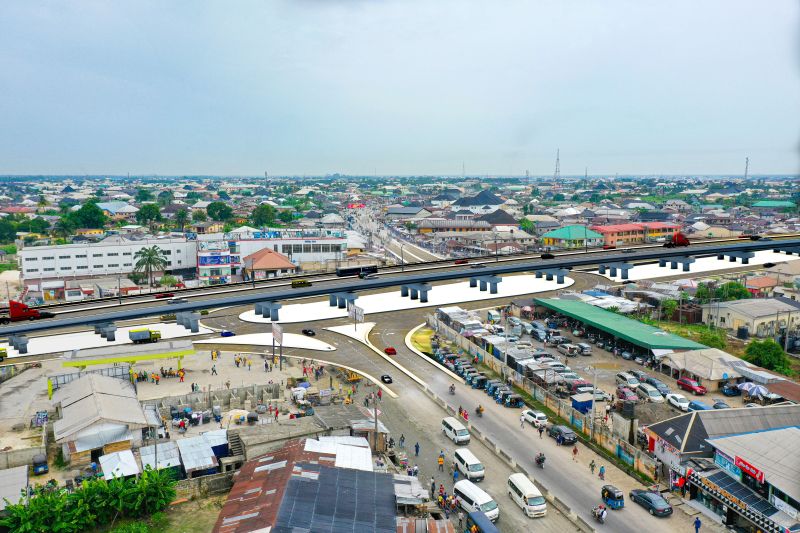
The Delta State Government has unveiled detailed 3D architectural renderings of the proposed Otovwodo Flyover in Ughelli, highlighting the scale and technical sophistication of one of the region’s most significant ongoing infrastructure projects.
The flyover, initiated under the administration of Governor Sheriff Oborevwori, forms part of a broader urban renewal and traffic decongestion strategy aimed at improving mobility across key commercial corridors in the state.
Designed by PrimeTech in collaboration with Julius Berger Nigeria Plc, the project features a 15-span elevated bridge supported by reinforced retaining structures.
The development also includes 1.20 kilometers of adjoining roadworks, complete with an integrated stormwater drainage system to prevent flooding and ensure the durability of the roadway. These features are intended to enhance the movement of people and goods while minimizing gridlock in Ughelli, a rapidly growing commercial hub that connects major routes across Delta and neighboring states.
For years, the Otovwodo junction area has experienced persistent traffic congestion due to increasing economic activity, expanding transport networks, and a rising population. The new flyover is designed to ease these challenges by separating high-volume through-traffic from local vehicular movement, thereby improving travel efficiency and reducing travel times for commuters, traders, and transport operators.
Urban planners note that the project is strategically positioned to support the region’s evolving economic landscape, especially as Ughelli continues to expand as a gateway city and commercial center. Residents, business owners, and local stakeholders have welcomed the design release, viewing it as evidence of sustained government commitment to modern infrastructure that supports development and business growth.
Once completed, the Otovwodo Flyover is expected to enhance road safety, boost commercial logistics, reduce vehicle congestion, and improve overall urban flow in Ughelli and adjoining communities. The project stands as a key landmark in Delta State’s ongoing drive toward infrastructure modernization, smarter city planning, and long-term economic sustainability.