

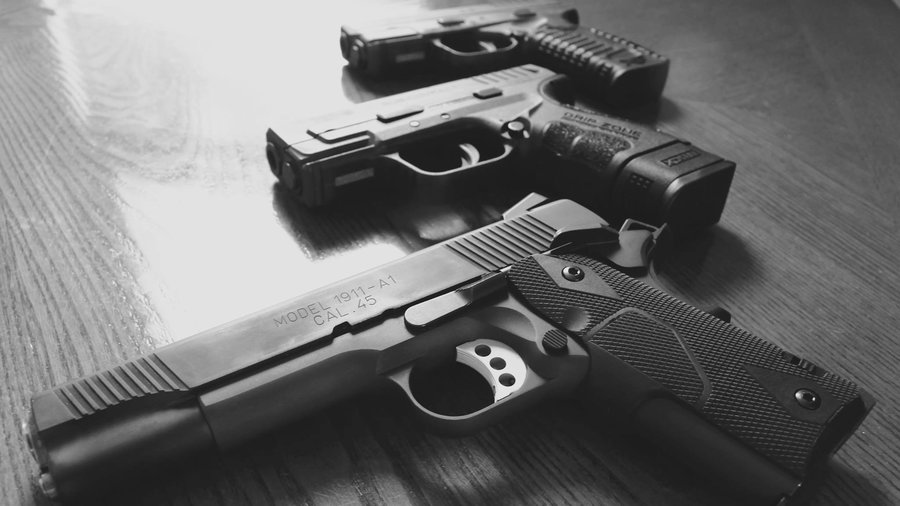
The louder the gunshots in our communities, the louder the calls have become for citizens to arm themselves. In today’s Nigeria where kidnappers operate freely, bandits overrun villages, and robbers attack in broad daylight many people feel abandoned by the very government meant to protect them.
So, the argument goes: “If the state cannot safeguard us, then let us defend ourselves.” It sounds reasonable. It sounds empowering. But it is also a dangerous illusion.
Legalizing firearms in a country already battling weak institutions, high unemployment, widespread poverty, and a thriving black market for weapons is like pouring petrol on a fire and hoping it will produce light instead of an explosion.
People often compare Nigeria to countries where citizens can legally own guns. What they forget is that those countries have what we do not: functioning systems. They have accurate databases, disciplined police forces, strong rule of law, universal ID systems, emergency response structures, and equally important social welfare programs that reduce desperation. Guns in those societies exist within a web of accountability. Here, we struggle to enforce even basic traffic laws.
In a fragile environment like ours, the idea of opening the door to more guns should worry all of us.
Imagine a Nigeria where every heated argument on the road can end in a shooting. Where cult groups already armed with locally made weapons suddenly have access to legally purchased ones. Where young people, frustrated by unemployment and hopelessness, can pick up a gun not just for protection, but for survival. Where domestic disputes, land quarrels, and political tensions escalate into bloodshed simply because firearms are close at hand.
This is not speculation. It is the predictable outcome of introducing more weapons into a country already struggling to manage the illegal ones in circulation.
Supporters of gun legalization often say, “Responsible citizens should be able to defend themselves.” But who is a responsible citizen in a place where identity verification can be bypassed with a bribe? Where politicians arm thugs during elections? Where police records are incomplete, and mental health assessments are barely available?
Once guns enter a community, they rarely stay with the original owner. They get stolen, borrowed, misused, resold, or captured. A weapon purchased “for protection” today can end up with a criminal tomorrow. And when firearms become widespread, criminals do not back down they simply upgrade their own weapons to stay ahead.
Instead of legalizing firearms, Nigeria should focus on strengthening the institutions that prevent violence in the first place. We need better policing, better intelligence gathering, tighter border control, community-based security structures, and a justice system that actually delivers justice. We need socioeconomic reforms that reduce the desperation that pushes young people toward crime. And above all, we need a government that takes public safety seriously not one that shifts the burden onto citizens.
Self-defense feels empowering. But real security comes from a functional state, not from turning every home into an armory.
Before Nigeria even thinks about legalizing firearms, it must first fix the system. Anything else is simply inviting a disaster we may not survive.