

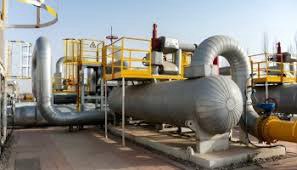
The Ogidigben Gas Revolution Industrial Park (GRIP) in Delta State has officially emerged as the single largest recipient of construction contracts under China’s Belt and Road Initiative (BRI) in 2025.
This monumental achievement positions Nigeria at the forefront of global BRI infrastructure engagement, as detailed in a new report by China energy expert Christoph Nedopil of Griffith University.
After years of significant delays, community conflicts, and investor uncertainty, the gas-based industrial project has now secured contracts worth approximately $24.6 billion. This includes a massive $20 billion deal awarded to China National Chemical Engineering. This figure represents a dramatic increase from Nigeria’s previous BRI construction inflows of $1.8 billion in 2024, solidifying the country’s status as the world’s largest BRI construction recipient in 2025.
Nigeria’s Growing Strategic Importance in BRI Energy Projects
Globally, BRI construction contracts saw a sharp rise to $128.4 billion in 2025, with total engagement reaching $213.5 billion, primarily driven by energy-related projects. Since 2013, Nigeria’s energy dealings with China have totaled about $28 billion, placing the nation behind only Pakistan and Saudi Arabia. This highlights Nigeria’s escalating strategic importance within China’s global infrastructure and energy plans.
The surge in investment for the Ogidigben Gas Revolution Industrial Park comes at a crucial time of declining global foreign direct investment, making Nigeria’s breakthrough especially significant.
Overcoming Challenges and Federal Government Revival
The GRIP project, despite its immense potential, had previously faced numerous setbacks. These challenges included ethnic tensions between the Ijaw and Itsekiri communities, persistent security issues, and investor withdrawals. However, the Federal Government took decisive action in 2022, establishing new coordination structures aimed at restoring investor confidence and fast-tracking the project’s development.
Spanning an impressive 2,700 hectares, the Ogidigben Gas Industrial Park is designed to host a diverse range of gas-based industries. These include fertilizer, methanol, petrochemicals, and aluminum production facilities. Planned as a tax-free public-private partnership, the project is projected to create approximately 250,000 direct and indirect jobs. It will leverage nearby gas reserves exceeding 18 trillion cubic feet, significantly supported by the Escravos–Lagos Pipeline System.
According to Nedopil, the unprecedented scale of Chinese involvement underscores sustained government efforts to stabilize the project and attract foreign capital. With GRIP now central to Nigeria’s industrial and energy ambitions, the country has secured a rare leadership position in large-scale, China-backed infrastructure development, paving the way for economic transformation in the Niger Delta.