

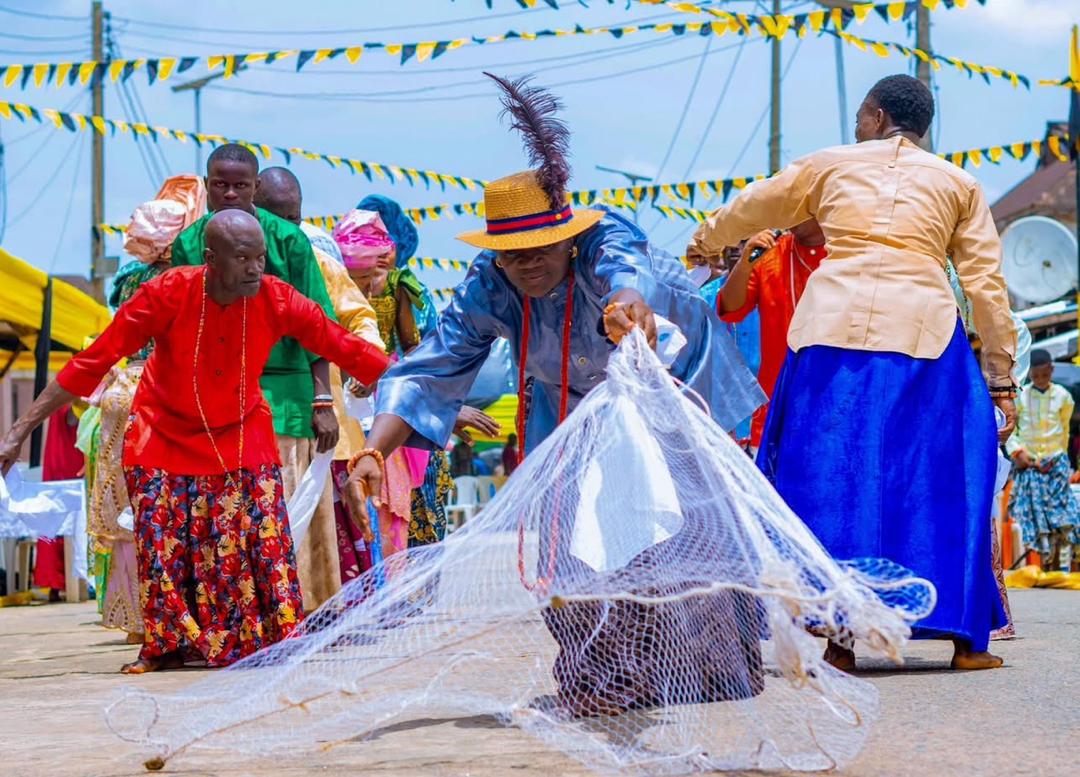
As the 2026 Amaseikumor Festival reaches its spectacular climax, the palace grounds of Oporoza have been transformed into a living theatre of the deep blue sea.
This year, two specific masquerade groups have set social media ablaze, blending ancient spiritualism with high-concept performance art that celebrates the “aquatic soul” of the Niger Delta.
The Oma-Ologbara masquerades brought a whole new meaning to the term “oceanic representation.”
The masquerades were praised by spectators for serving “aquatic life realness.”
Each masquerade was meticulously designed to represent a different species of ocean fish found in the local waters.
Their movements weren’t just dance steps; they were a masterclass in biology and folklore.
From the sudden, sharp darts of a predator to the shimmering, defensive huddle of a school of fish, the Oma-Ologbara depicted the raw survival instincts and beauty of the river’s inhabitants.
“You could actually see the life of the river in their costumes,” said one captivated tourist. “It wasn’t just a mask; it was an ecosystem in motion.”
While Oma-Ologbara focused on the fish themselves, the Ijekere masquerade brought the “vibe” of the riverbanks to life.
Highlighting the deep cultural synergy of the region, the Ijekere display celebrated the rich Itsekiri heritage and the community’s legendary love for traditional cuisine—specifically, the iconic Banga Soup.
Just as the soup is about to be served, the Ijekere himself takes center stage. Using his superior “aquatic survival skills,” the masquerade turns the tables on the humans, playfully chasing away the “intruders” and reclaiming his place as the king of the water.
The performance concluded with a roar of laughter and applause from the crowd, including the visiting dignitaries and traditional chiefs.
The underlying message was one of joy and the celebration of nature’s bounty.
The display served as a powerful reminder that the Amaseikumor Festival is more than just a religious rite , it is a vibrant celebration of the food, the struggles and the “sweet life” that defines the Ijaw and Itsekiri people of the Delta.